
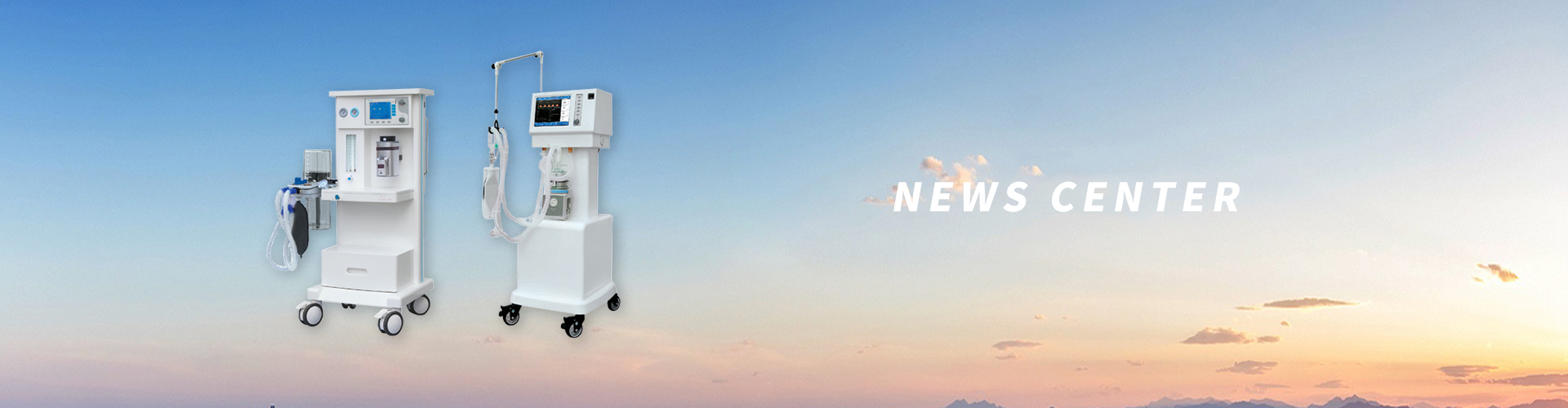
There are various differences in the airflow delivery system of domestic anesthesia machines among different models.
From the perspective of gas supply, high-end domestic anesthesia machines usually have a wider range of gas source compatibility. They can connect multiple gas sources, in addition to common oxygen and nitrous oxide, they can also be connected to gases used in anesthesia scenarios such as helium. Moreover, high-end models are more complex and secure in terms of gas source interface design, and may be equipped with intelligent recognition devices that can automatically detect the type of gas source and match corresponding parameters, while some basic models may only support one or two conventional gas sources and have relatively simple interfaces.
In the gas mixing section, there are significant differences in accuracy and control methods among different models. High quality domestic anesthesia machines use high-precision electronic flow sensors and microprocessor control systems. These sensors can accurately measure gas flow to a few decimal places, and microprocessors mix gases based on complex algorithms and preset high-precision ratios. For example, in scenarios such as pediatric anesthesia that require high gas ratios, oxygen and anesthetic gases can be accurately mixed in strict proportions. However, mid to low end models may use mechanical flow control valves and relatively simple control circuits, resulting in slightly lower accuracy of gas mixing, which may not provide such accurate gas mixing in complex anesthesia scenarios.
The design of the breathing circuit also varies depending on the model. High end models of breathing circuits often have more optimized pipeline materials and structures. They may use new materials with low resistance and high elasticity to reduce energy loss and turbulence formation during gas transportation. Moreover, it has stronger heating and humidification functions, which can accurately control the temperature and humidity of the inhaled gas, making patients feel more comfortable. Some high-end models are also equipped with the function of automatically adjusting the humidification level, which can be adjusted in real time according to the environmental humidity and patient breathing conditions. The respiratory circuit materials of basic models may be relatively ordinary, with relatively simple heating and humidification functions, and may not even have automatic adjustment functions.
In terms of pressure and flow monitoring, high-quality anesthesia machines have higher sensor accuracy and faster response speed. Capable of capturing small pressure and flow changes in an instant, and promptly notifying medical staff through a complex alarm system. However, some mid to low end models may be slightly inferior in terms of monitoring sensitivity and alarm accuracy. These differences make different models of anesthesia machines suitable for different medical scenarios and needs.


